
Did You Know?
Watercress was declared the world's most nutrient-dense vegetable by the CDC in 2014, scoring 100 out of 100 on their 'powerhouse foods' ranking.
Overview
Europe · spring · herbs
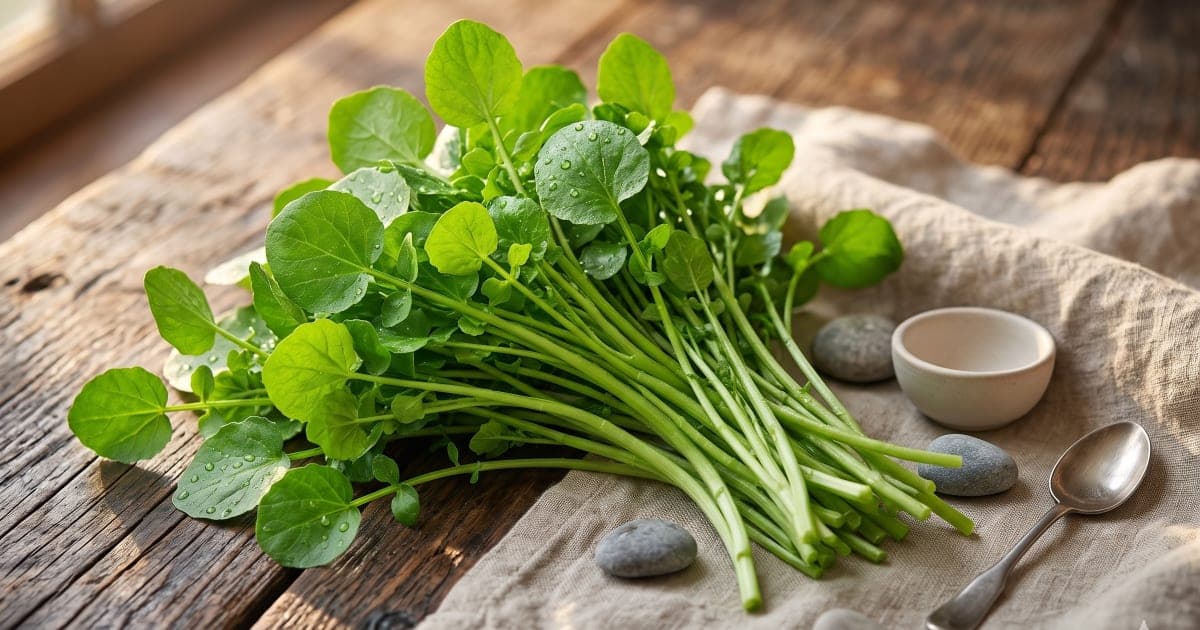
Watercress is a fast-growing aquatic herb with small, round leaves and a peppery, slightly bitter flavor — one of the oldest consumed greens with powerful nutritional properties.
Europe
Origin
spring
Season
Easy
Difficulty
herbs
Category
Flavor Profile
Pepperyfreshcrisp
Storage Tips
Store in a plastic bag or container with a little water in the refrigerator; keeps for 2–3 days — best used immediately.
Photo Gallery
How to Cook with Watercress
Recipes, pairings, substitutes, and professional tips
Cooking Tips
Best served raw in salads or as a garnish; brief wilting in pasta sauces works; avoid long cooking which destroys nutrients and flavor.
Substitutes
Arugula (similar pepperiness), baby spinach + a squeeze of lemon, or radish sprouts
Nutrition & Health Benefits
The nutritional profile and health properties of Watercress
Nutrition Highlights
calories
11 kcal per 100g
key_nutrients
Vitamin K, vitamin C, vitamin A, PEITC, calcium, iron
Quick Facts
Categoryherbs
OriginEurope
Seasonspring
DifficultyEasy
Health Benefits
One of the most nutrient-dense foods; rich in vitamin K, C, A; PEITC compound may reduce cancer risk; supports bone and eye health.
Watercress Photos
4 photos showcasing Watercress in its many forms
🌿
Watercress
herbs
OriginEurope
Seasonspring
DifficultyEasy
Flavor Notes
Pepperyfreshcrisp
Shop This Ingredient
Find premium Watercress in our store
Explore More Ingredients
Discover the stories, origins, and culinary secrets behind the world's most fascinating ingredients.