
Did You Know?
In ancient Egypt, thyme was used for embalming; in medieval Europe, women gave knights thyme sprigs as a symbol of courage before battle.
Overview
Mediterranean · summer · herbs
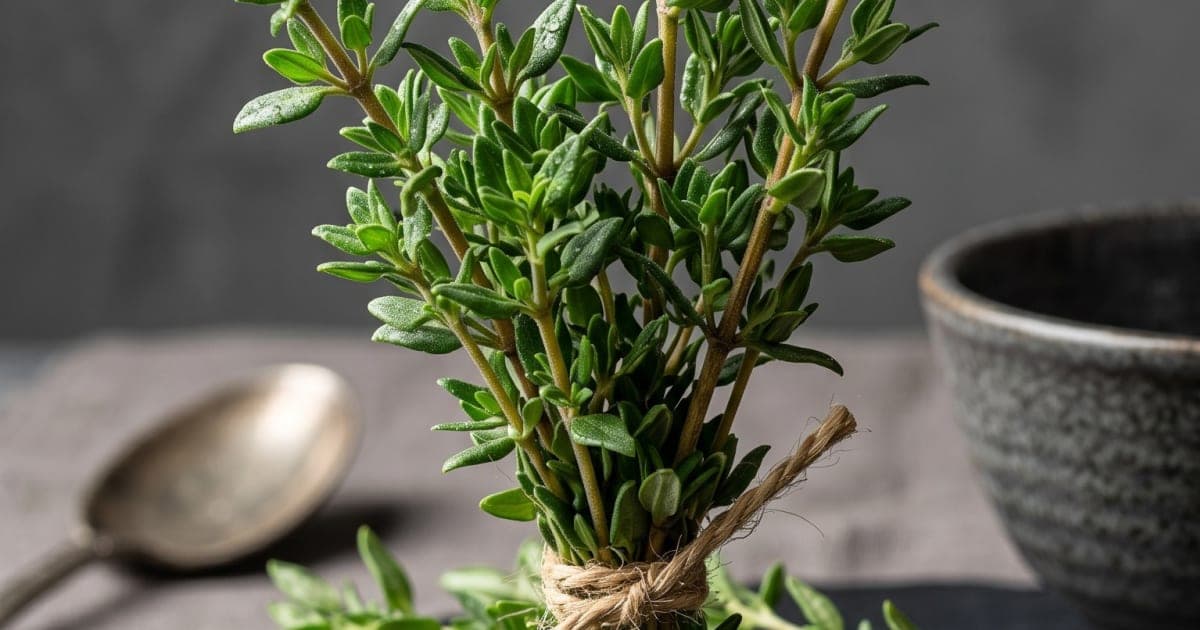
Thyme is a fundamental culinary herb with small, fragrant leaves and a warm, earthy, slightly minty flavor that anchors countless savory dishes across European and Middle Eastern cuisines.
Mediterranean
Origin
summer
Season
Easy
Difficulty
herbs
Category
Flavor Profile
Earthymintylemony
Storage Tips
Fresh thyme keeps for 1–2 weeks refrigerated; dried thyme for 2–3 years in an airtight container.
Photo Gallery
How to Cook with Thyme
Recipes, pairings, substitutes, and professional tips
Cooking Tips
Thyme can be added early in cooking as it holds its flavor well under heat; fresh sprigs work great in bouquet garni; dried thyme is more concentrated.
Best Pairings
garlicolive oilchickenlambmushroomlemon
Substitutes
Marjoram (sweeter), oregano (more intense), or rosemary (stronger, woodier)
Nutrition & Health Benefits
The nutritional profile and health properties of Thyme
Nutrition Highlights
calories
101 kcal per 100g (fresh)
key_nutrients
Thymol, vitamin C, vitamin K, iron, manganese, calcium
Quick Facts
Categoryherbs
OriginMediterranean
Seasonsummer
DifficultyEasy
Health Benefits
Thymol has powerful antibacterial, antifungal, and antiseptic properties; supports respiratory health; rich in vitamin C and iron.
Thyme Photos
4 photos showcasing Thyme in its many forms
🌿
Thyme
herbs
OriginMediterranean
Seasonsummer
DifficultyEasy
Flavor Notes
Earthymintylemony
Shop This Ingredient
Find premium Thyme in our store
Pairs Well With
garlicolive oilchickenlambmushroomlemon
Explore More Ingredients
Discover the stories, origins, and culinary secrets behind the world's most fascinating ingredients.