
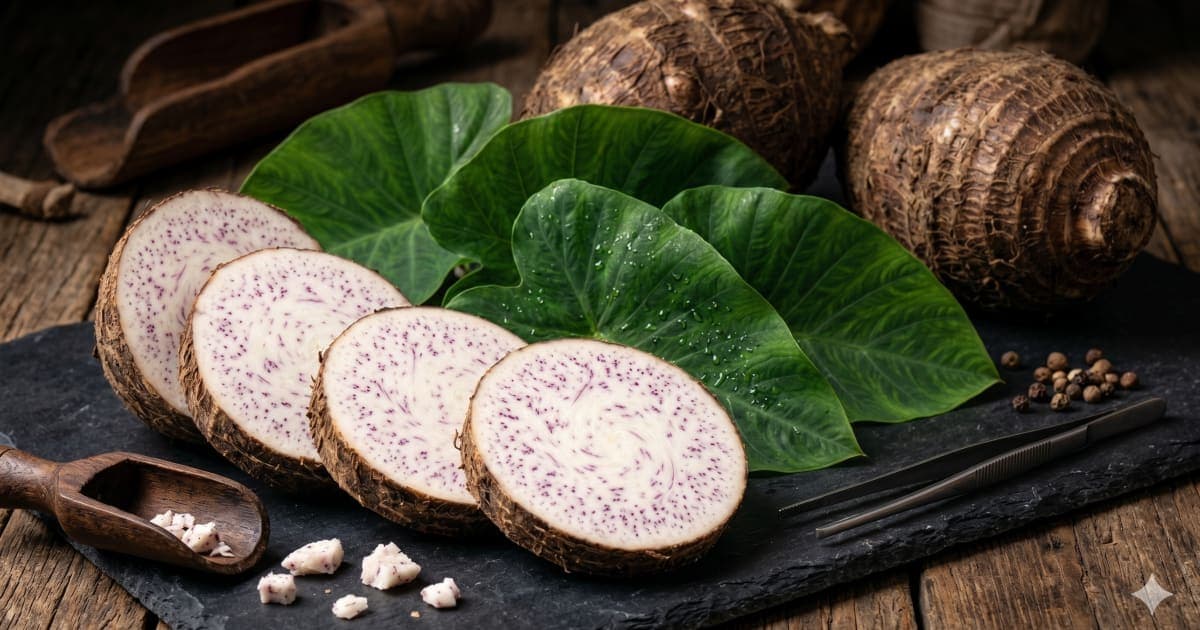
Did You Know?
Taro is one of the oldest cultivated crops, grown for over 10,000 years in Asia and the Pacific.
Overview
Asia/Pacific · fall · vegetables
A starchy tropical root vegetable with a slightly sweet, nutty flavor, used in Asian, African, and Pacific cuisines.
Asia/Pacific
Origin
fall
Season
Easy
Difficulty
vegetables
Category
Flavor Profile
Starchynuttyslightly sweet
Storage Tips
Store whole at room temperature up to 1 week or refrigerate up to 3 weeks.
Photo Gallery
How to Cook with Taro
Recipes, pairings, substitutes, and professional tips
Cooking Tips
Always cook — raw taro causes itching. Boil, steam, or fry like potato. Use in Hawaiian poi or bubble tea.
Best Pairings
coconut milklemongrassgingersoy saucesesame
Substitutes
Potato, yam, sweet potato
Nutrition & Health Benefits
The nutritional profile and health properties of Taro
Nutrition Highlights
fat
0.1
carbs
34.6
fiber
4.1
protein
0.5
calories
142
Quick Facts
Categoryvegetables
OriginAsia/Pacific
Seasonfall
DifficultyEasy
Health Benefits
High in fiber, potassium, and vitamin E. Resistant starch supports gut health and blood sugar control.
Taro Photos
4 photos showcasing Taro in its many forms
🌿
Taro
vegetables
OriginAsia/Pacific
Seasonfall
DifficultyEasy
Flavor Notes
Starchynuttyslightly sweet
Shop This Ingredient
Find premium Taro in our store
Pairs Well With
coconut milklemongrassgingersoy saucesesame
Explore More Ingredients
Discover the stories, origins, and culinary secrets behind the world's most fascinating ingredients.