
🌿 herbsEasy to use
Shungiku
Mediterranean region and Central Asia; primarily cultivated as food in East Asia.Cool season — spring and fall; available year-round in Asian markets.Distinctive, herbal, slightly bitter and earthy with a mild floral
Did You Know?
In Japan, shungiku (spring chrysanthemum) is harvested in spring when the leaves are young and tender — older leaves are considered too bitter for eating.
Overview
Mediterranean region and Central Asia; primarily cultivated as food in East Asia. · Cool season — spring and fall; available year-round in Asian markets. · herbs
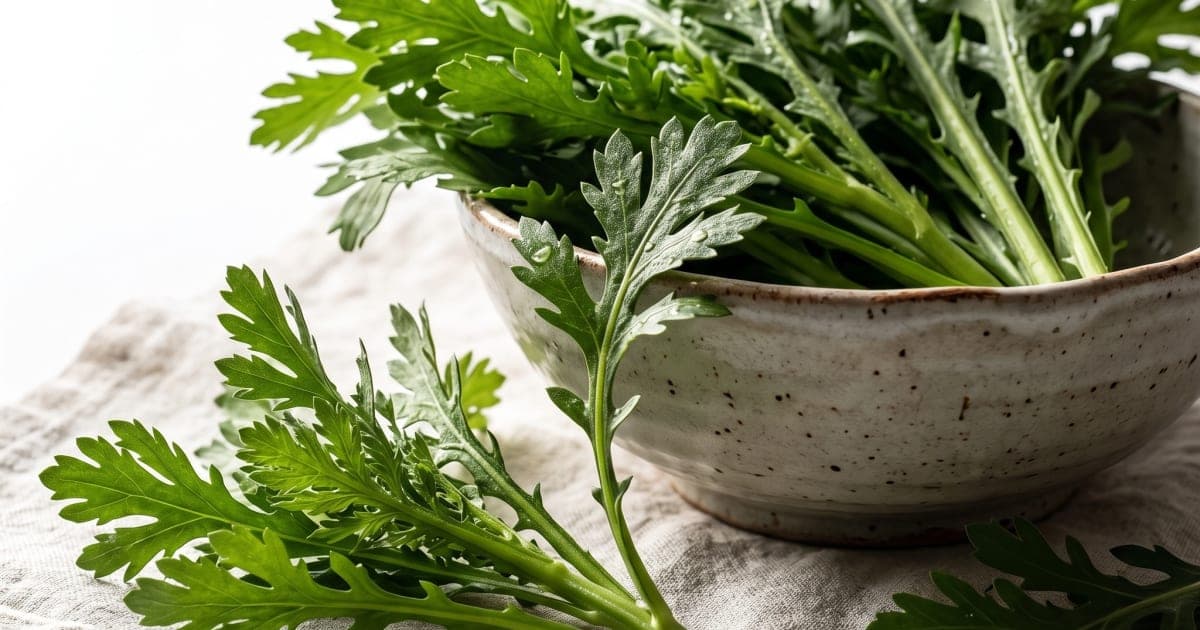
Edible chrysanthemum greens (Chrysanthemum coronarium) widely used in Chinese, Japanese, and Korean cooking. Also called garland chrysanthemum.
Mediterranean region and Central Asia; primarily cultivated as food in East Asia.
Origin
Cool season — spring and fall; available year-round in Asian markets.
Season
Easy
Difficulty
herbs
Category
Flavor Profile
Distinctiveherbalslightly bitter and earthy with a mild floralchrysanthemum-like aroma.
Storage Tips
Refrigerate loosely wrapped for up to 3 days. Very perishable — use quickly.
Photo Gallery
How to Cook with Shungiku
Recipes, pairings, substitutes, and professional tips
Cooking Tips
Use in hot pot, stir-fries, and noodle soups. Blanch briefly for salads. Pairs well with sesame oil and soy sauce.
Best Pairings
hot potshabu-shabusesame oilsoy saucegarlictofunoodles
Substitutes
Spinach, watercress, or arugula for a similar bitter green.
Nutrition & Health Benefits
The nutritional profile and health properties of Shungiku
Nutrition Highlights
fat
0.2
carbs
3.9
fiber
1.6
protein
3.3
calories
22
Quick Facts
Categoryherbs
OriginMediterranean region and Central Asia; primarily cultivated as food in East Asia.
SeasonCool season — spring and fall; available year-round in Asian markets.
DifficultyEasy
Health Benefits
Rich in vitamins A, C, and K, iron, and potassium. Antioxidant and may support bone health.
Shungiku Photos
4 photos showcasing Shungiku in its many forms
🌿
Shungiku
herbs
OriginMediterranean region and Central Asia; primarily cultivated as food in East Asia.
SeasonCool season — spring and fall; available year-round in Asian markets.
DifficultyEasy
Flavor Notes
Distinctiveherbalslightly bitter and earthy with a mild floralchrysanthemum-like aroma.
Shop This Ingredient
Find premium Shungiku in our store
Pairs Well With
hot potshabu-shabusesame oilsoy saucegarlictofunoodles
Explore More Ingredients
Discover the stories, origins, and culinary secrets behind the world's most fascinating ingredients.