
Did You Know?
The word 'sage' comes from the Latin 'salvere' meaning 'to save or heal' — medieval herbalists used sage for everything from snake bites to toothaches.
Overview
Mediterranean · year-round · herbs
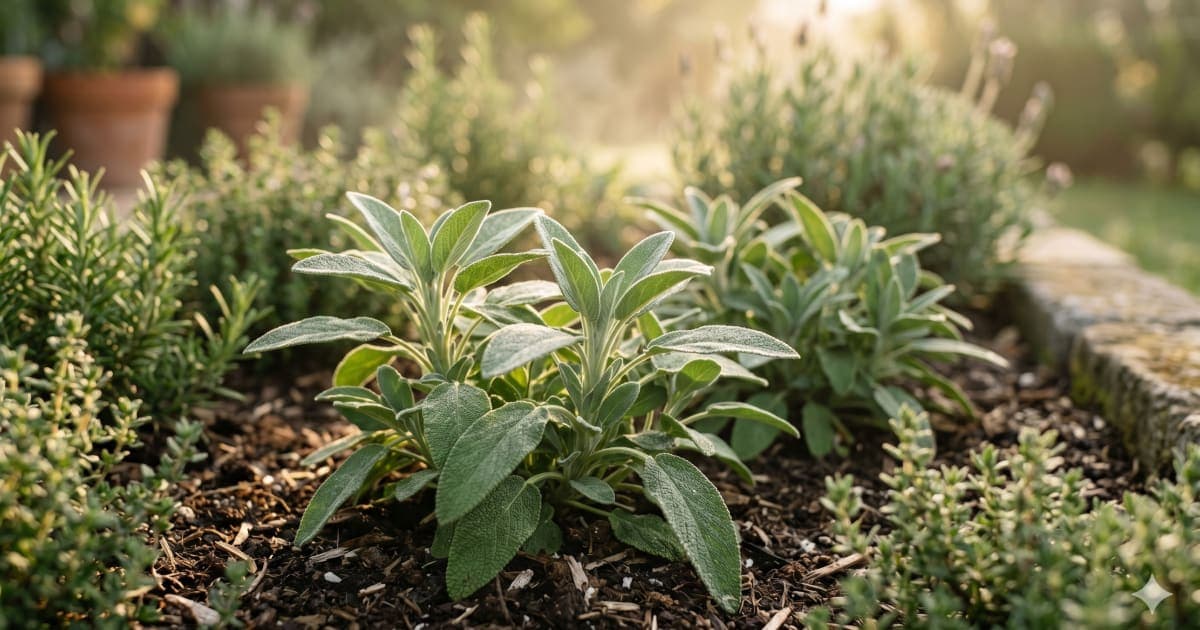
Sage is an aromatic, earthy herb with soft gray-green leaves and a warm, slightly bitter, musky flavor used in Italian cooking, stuffing, brown butter sauces, and pork dishes.
Mediterranean
Origin
year-round
Season
Easy
Difficulty
herbs
Category
Flavor Profile
Earthysavoryslightly bitter
Storage Tips
Store fresh sage wrapped in paper towel in the refrigerator for up to 2 weeks; dried keeps for 1–2 years.
Photo Gallery
How to Cook with Sage
Recipes, pairings, substitutes, and professional tips
Cooking Tips
Fry sage leaves in butter until crispy for a classic Italian technique; add to brown butter for pasta and gnocchi; use in stuffing and sausages.
Best Pairings
butterpumpkinpastaporklambwhite bean
Substitutes
Rosemary (stronger), marjoram (milder), or dried thyme
Nutrition & Health Benefits
The nutritional profile and health properties of Sage
Nutrition Highlights
calories
315 kcal per 100g (dried)
key_nutrients
Vitamin K, iron, calcium, carnosol, rosmarinic acid, antioxidants
Quick Facts
Categoryherbs
OriginMediterranean
Seasonyear-round
DifficultyEasy
Health Benefits
Rosmarinic acid and carnosol have anti-inflammatory and antioxidant properties; may improve memory and cognitive function; blood sugar support.
Sage Photos
5 photos showcasing Sage in its many forms
🌿
Sage
herbs
OriginMediterranean
Seasonyear-round
DifficultyEasy
Flavor Notes
Earthysavoryslightly bitter
Shop This Ingredient
Find premium Sage in our store
Pairs Well With
butterpumpkinpastaporklambwhite bean
Explore More Ingredients
Discover the stories, origins, and culinary secrets behind the world's most fascinating ingredients.