
🌿 grainsEasy to use
Ramen Noodles
Japan (influenced by Chinese noodles)Year-roundSpringy, slightly alkaline, chewy
Did You Know?
Ramen was voted Japan's greatest invention of the 20th century in a 2000 poll — surpassing karaoke, the Walkman, and video games.
Overview
Japan (influenced by Chinese noodles) · Year-round · grains
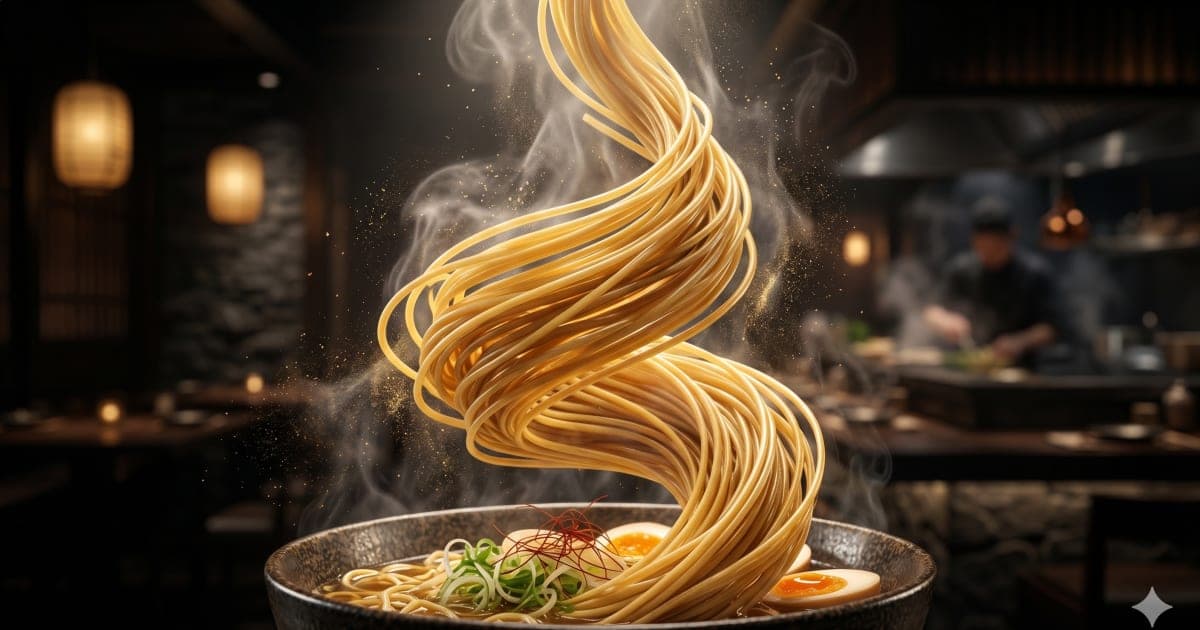
Wheat noodles with an alkaline (kansui) treatment giving them a characteristic springy texture and yellow color, served in flavored broth.
Japan (influenced by Chinese noodles)
Origin
Year-round
Season
Easy
Difficulty
grains
Category
Flavor Profile
Springyslightly alkalinechewyabsorbs broth
Storage Tips
Fresh ramen: refrigerate and use within 3 days. Dry ramen: airtight container for 1 year.
Photo Gallery
How to Cook with Ramen Noodles
Recipes, pairings, substitutes, and professional tips
Cooking Tips
Cook 2–3 minutes in boiling water. Use fresh ramen for restaurant-quality result. Top with chashu pork, soft-boiled egg, nori, bamboo shoots, and green onions.
Best Pairings
pork brothmisosoy saucechashu porksoft-boiled eggsnori
Substitutes
Spaghetti with baking soda (homemade substitute), udon, soba
Nutrition & Health Benefits
The nutritional profile and health properties of Ramen Noodles
Nutrition Highlights
fat
4
carbs
87
fiber
2
protein
13
calories
436
Quick Facts
Categorygrains
OriginJapan (influenced by Chinese noodles)
SeasonYear-round
DifficultyEasy
Health Benefits
Good source of carbohydrates. The alkaline kansui adds a unique flavor — fresh ramen noodles also contain egg for protein.
Ramen Noodles Photos
5 photos showcasing Ramen Noodles in its many forms
🌿
Ramen Noodles
grains
OriginJapan (influenced by Chinese noodles)
SeasonYear-round
DifficultyEasy
Flavor Notes
Springyslightly alkalinechewyabsorbs broth
Shop This Ingredient
Find premium Ramen Noodles in our store
Pairs Well With
pork brothmisosoy saucechashu porksoft-boiled eggsnori
Explore More Ingredients
Discover the stories, origins, and culinary secrets behind the world's most fascinating ingredients.