
Did You Know?
Passion fruit got its name from Spanish missionaries in the Americas in the 1500s who saw the flower as a symbol of Christ's Passion (crucifixion).
Overview
Brazil · summer · fruits
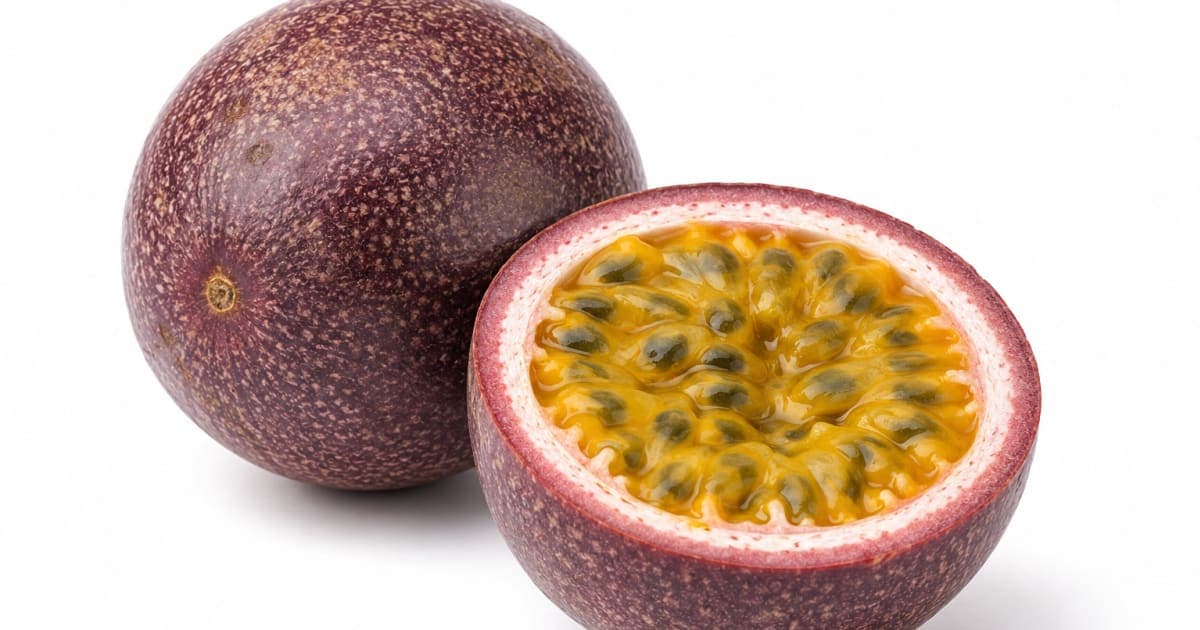
Passion fruit is a small tropical fruit with wrinkled purple or yellow skin containing aromatic, tart-sweet orange pulp filled with edible seeds — intensely flavored and perfumed.
Brazil
Origin
summer
Season
Easy
Difficulty
fruits
Category
Flavor Profile
Tarttropicalfloralseedy
Storage Tips
Ripe passion fruit (wrinkled skin) keeps for 1 week refrigerated; smooth skin means not yet ripe — ripen at room temperature first.
Photo Gallery
How to Cook with Passion Fruit
Recipes, pairings, substitutes, and professional tips
Cooking Tips
Scoop pulp and strain for juice, or use seeds and pulp together; extraordinary in cheesecakes, mousse, vinaigrettes, and cocktails.
Best Pairings
mangococonutvanillacreamchocolatelime
Substitutes
Mango + lime juice (similar tropical-tart notes), tamarind juice, or guava
Nutrition & Health Benefits
The nutritional profile and health properties of Passion Fruit
Nutrition Highlights
calories
97 kcal per 100g
key_nutrients
Vitamin C, vitamin A, iron, fiber, piceatannol, flavonoids
Quick Facts
Categoryfruits
OriginBrazil
Seasonsummer
DifficultyEasy
Health Benefits
High in vitamins C and A; rich in flavonoids with anxiety-reducing properties; fiber-rich; supports immune function.
Passion Fruit Photos
4 photos showcasing Passion Fruit in its many forms
🌿
Passion Fruit
fruits
OriginBrazil
Seasonsummer
DifficultyEasy
Flavor Notes
Tarttropicalfloralseedy
Shop This Ingredient
Find premium Passion Fruit in our store
Pairs Well With
mangococonutvanillacreamchocolatelime
Explore More Ingredients
Discover the stories, origins, and culinary secrets behind the world's most fascinating ingredients.