
🌿 proteinsEasy to use
Egg
Southeast Asiayear-roundTaste: Mild, savory, and slightly salty. The yolk provides a deep
Did You Know?
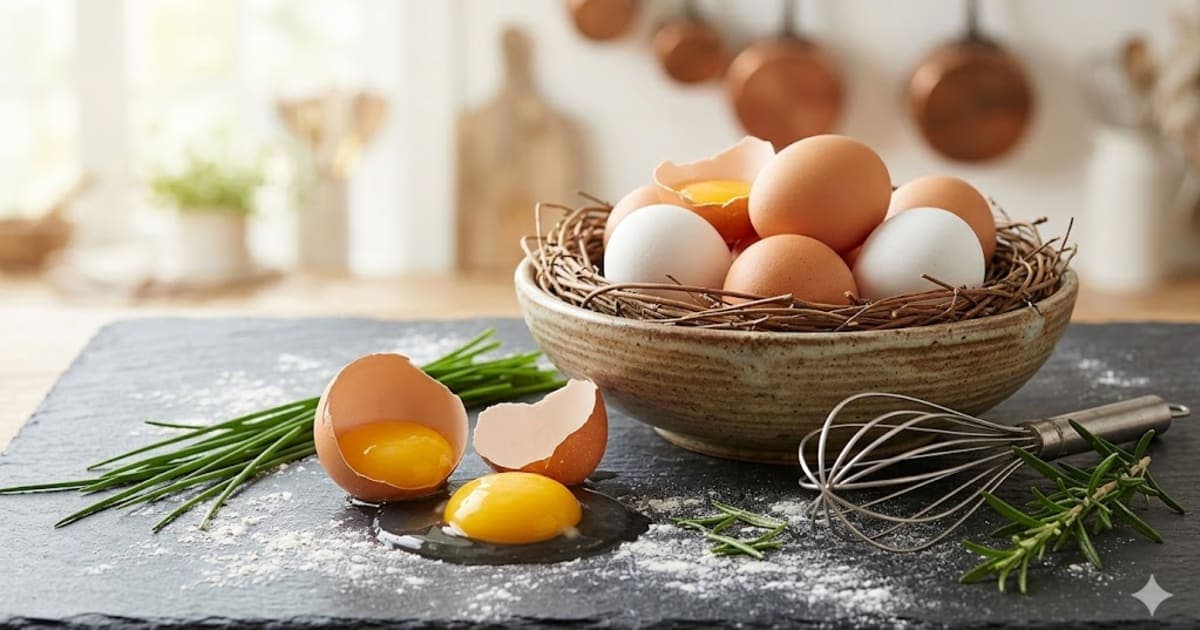
The color of a chicken's eggshell (white, brown, or even blue/green) is determined by the breed of the hen and generally corresponds to the color of her earlobes! It has no impact on the nutritional value or taste of the egg.
Overview
Southeast Asia · year-round · proteins
Egg is a highly nutritious food that is rich in protein, vitamins, and minerals. It is a versatile ingredient that can be cooked in various ways, such as boiled, fried, scrambled, or baked, and can be eaten on its own or used in recipes to make dishes like omelets, frittatas, quiches, and custards.Eggs are also a common ingredient in many baked goods, such as cakes, cookies, and bread, where they act as a binding agent and provide moisture and richness to the finished product.While eggs are a healthy and nutritious food, it is important to handle and cook them properly to prevent the risk of foodborne illness. Eggs should be stored in the refrigerator, cooked until the yolk and white are firm, and not consumed if they are cracked or have been left at room temperature for more than two hours.
Southeast Asia
Origin
year-round
Season
Easy
Difficulty
proteins
Category
Flavor Profile
Taste: Mildsavoryand slightly salty. The yolk provides a deep"umami" richness. Aroma: Neutral when raw; buttery and sulfurous (in a pleasantsavory way) when cooked. Texture: Incredibly versatile—ranging from liquid and silky to firm and bouncyor even light and airy when whisked into a foam.
Storage Tips
Location: Store in the main body of the fridge, not the door, to maintain a consistent temperature.Orientation: Keep them in their original carton to prevent them from absorbing odors through their porous shells.Freshness Test: Place an egg in a bowl of water. If it sinks, it’s fresh; if it tilts or stands, it’s older; if it floats, discard it.
How to Cook with Egg
Recipes, pairings, substitutes, and professional tips
Cooking Tips
Cooking eggs is a fundamental skill, but since they are incredibly sensitive to temperature, a few small tweaks can turn a rubbery breakfast into a restaurant quality meal.The EssentialsTemperature Control: Eggs cook very quickly. For scrambled eggs or omelets, use low to medium-low heat. If the eggs sizzle loudly the moment they hit the pan, the heat is too high.The "Carry-over" Rule: Eggs continue to cook for about a minute after you take them off the stove. To avoid dryness, remove them from the heat when they still look slightly "wet."Salt Timing: For the fluffiest scrambled eggs, salt them about 15 minutes before cooking. This helps break down the proteins so they don't tighten up and squeeze out moisture during cooking.
Best Pairings
Pairings Herbs: Chivestarragonparsleyand dill. Dairy: Buttersharp cheddarfetaand heavy cream. Vegetables: Spinachmushroomsasparagusand tomatoes. Spices: Smoked paprikablack pepperand cumin.
Substitutes
For Binding: 1/4 cup of applesauce or mashed banana.For Leavening: 1 tablespoon of flaxseed meal mixed with 3 tablespoons of water (Flax Egg).For Moisture: 1/4 cup of yogurt or silken tofu.
Nutrition & Health Benefits
The nutritional profile and health properties of Egg
Quick Facts
Categoryproteins
OriginSoutheast Asia
Seasonyear-round
DifficultyEasy
Health Benefits
Eggs are often called "nature's multivitamin."Complete Protein: Contains all nine essential amino acids.Choline: Essential for brain health and development.Lutein & Zeaxanthin: Antioxidants that support eye health.Vitamins: Rich in B12, D, and Riboflavin.
🌿
Egg
proteins
OriginSoutheast Asia
Seasonyear-round
DifficultyEasy
Flavor Notes
Taste: Mildsavoryand slightly salty. The yolk provides a deep"umami" richness. Aroma: Neutral when raw; buttery and sulfurous (in a pleasantsavory way) when cooked. Texture: Incredibly versatile—ranging from liquid and silky to firm and bouncyor even light and airy when whisked into a foam.
Shop This Ingredient
Find premium Egg in our store
Pairs Well With
Pairings Herbs: Chivestarragonparsleyand dill. Dairy: Buttersharp cheddarfetaand heavy cream. Vegetables: Spinachmushrooms
Explore More Ingredients
Discover the stories, origins, and culinary secrets behind the world's most fascinating ingredients.