
🌿 dairyFeaturedEasy to use
Coconut Milk:
Southeast Asia (specifically the Malay Archipelago)year round.Taste: It has a distinctively sweet, nutty, and tropical coconut flavour. Aroma: The aroma is deeply fragrant
Did You Know?
In many traditional cultures, coconut milk is made fresh daily. The first press of the grated coconut meat yields the thickest, richest "cream," while subsequent presses with added water produce thinner "milk," which is used for different culinary purposes.
Overview
Southeast Asia (specifically the Malay Archipelago) · year round. · dairy
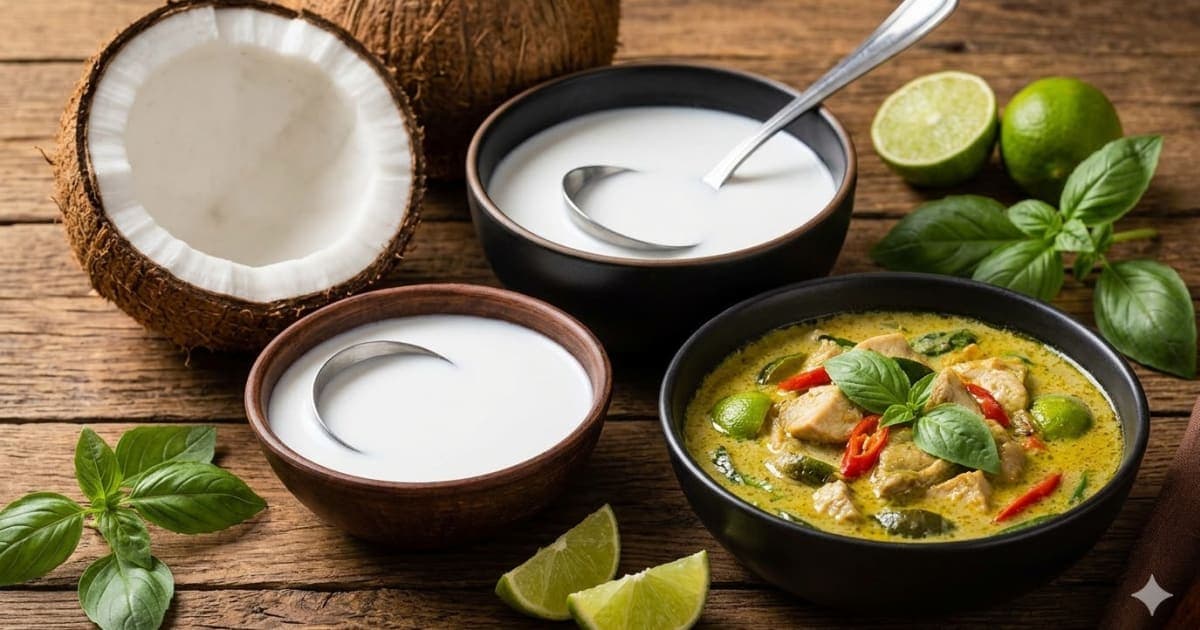
Coconut milk is a rich, opaque, white liquid extracted from the grated meat of mature coconuts. Not to be confused with coconut water (the clear liquid found inside young green coconuts), coconut milk is much thicker and creamier due to its high oil content. It is a staple ingredient in Southeast Asian, South Asian, Caribbean, and Brazilian cuisines. In cooking, it provides a luxurious, velvety texture and a distinct, tropical flavour to both savoury curries and sweet desserts.
Southeast Asia (specifically the Malay Archipelago)
Origin
year round.
Season
Easy
Difficulty
dairy
Category
Flavor Profile
Taste: It has a distinctively sweetnuttyand tropical coconut flavour. Aroma: The aroma is deeply fragrantwarmand invitinginstantly evoking thoughts of tropical beaches. Texture: Depending on whether you use "full-fat" or "lite" coconut milkthe texture ranges from incredibly creamy and rich to thinner and milk-like.
Storage Tips
Unopened: Canned or carton coconut milk should be stored in a cool, dark place (like a pantry). Check the expiration date.Opened: Once opened, transfer unused coconut milk to an airtight container (glass or plastic) and refrigerate immediately. Use within 3–5 days.Freezing: Yes, you can freeze coconut milk! Freeze it in air tight containers or in ice cube trays (for easy portioning). When thawed, the texture may be grainy as the fat separates, but it is still perfectly good for cooking in soups, smoothies, or curries where it will be heated and blended.
Photo Gallery
How to Cook with Coconut Milk:
Recipes, pairings, substitutes, and professional tips
Cooking Tips
Don't Shake the Can (Sometimes): If you need thick coconut cream for a recipe (like dairy free whipped cream), do not shake the can. Chill it overnight, and the cream will solidify perfectly on top, allowing you to scoop it out.Avoid Boiling: When adding coconut milk to hot curries or soups, add it toward the end of cooking and warm it gently. Boiling can cause the milk to "split" or curdle, which separates the oil from the water and affects the smooth texture.Thinning It Down: If full fat coconut milk is too thick, you can easily thin it by whisking in water or broth.Balancing Flavours: Because it is rich and naturally sweet, coconut milk often needs balancing with acid (lime juice), heat (chili), or salt to create a complex savoury flavour profile.
Best Pairings
Coconut milk is highly compatible with many flavorsparticularly those that balance its richness:
Spices: Gingergarlicturmericcumincorianderchili peppers (all types).
Acids: Lime juicelemongrasstamarind.
Herbs: CilantroThai basilmint.
Proteins: Chickenshrimpfishtofuchickpeas.
Fruits: Mangopineapplebananapassion fruit.
Sweet: Palm sugarmaple syrupvanilla.
Substitutes
If a recipe calls for coconut milk and you don't have it, try these:For Texture (Dairy): Heavy cream or whole milk (this works best in savoury dishes but lacks the coconut flavour).For Flavor (Dairy-Free): Other nut milks (almond, cashew, oat) mixed with a drop of coconut extract. Note that these are much thinner and less rich.Best Dairy-Free Alternative: Heavy cream substitute (made from silk tofu and plant oil) can match the texture, but you will miss the flavour.
Nutrition & Health Benefits
The nutritional profile and health properties of Coconut Milk:
Quick Facts
Categorydairy
OriginSoutheast Asia (specifically the Malay Archipelago)
Seasonyear round.
DifficultyEasy
Health Benefits
Coconut milk is rich in calories and fat, but it offers unique health properties:MCFA Fats: It is high in Medium Chain Fatty Acids (MCFAs), particularly Laurie acid. These fats are metabolized differently than long chain fats; the body uses them rapidly for energy rather than storing them. Lauric acid is also known for its antimicrobial and antifungal properties.Lactose-Free: It is a perfect, naturally lactose free alternative for those with dairy allergies or intolerances.Nutrients: It contains small amounts of essential minerals, including manganese, copper, phosphorus, and magnesium.
Coconut Milk: Photos
4 photos showcasing Coconut Milk: in its many forms
🌿
Coconut Milk:
dairy
OriginSoutheast Asia (specifically the Malay Archipelago)
Seasonyear round.
DifficultyEasy
Flavor Notes
Taste: It has a distinctively sweetnuttyand tropical coconut flavour. Aroma: The aroma is deeply fragrantwarmand invitinginstantly evoking thoughts of tropical beaches. Texture: Depending on whether you use "full-fat" or "lite" coconut milkthe texture ranges from incredibly creamy and rich to thinner and milk-like.
Shop This Ingredient
Find premium Coconut Milk: in our store
Pairs Well With
Coconut milk is highly compatible with many flavorsparticularly those that balance its richness:
Spices: Gingergarlicturmericcumincorianderchili peppers (all types).
Acids: Lime juicelemongrass
Explore More Ingredients
Discover the stories, origins, and culinary secrets behind the world's most fascinating ingredients.