
🌿 condimentsEasy to use
Cocoa
Mesoamerica, including the Mayans and the Aztecs.year-round.Bitter, Complex, and Aromatic. Pure
Did You Know?
The scientific name of the cacao tree, Theobroma cacao, literally translates from Greek to "Food of the Gods."
Overview
Mesoamerica · year-round. · condiments
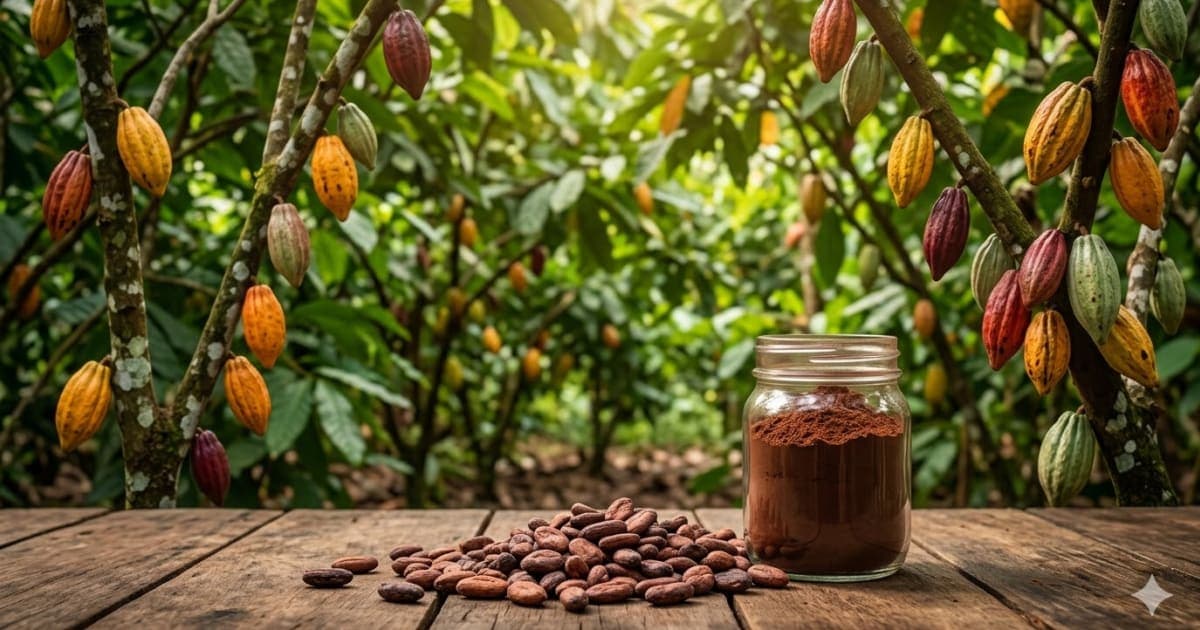
Cocoa is derived from the fermented and dried seeds of the Theobroma cacao tree. These seeds, often called "beans," are housed inside large, colorful pods that grow directly from the trunk and branches. Once processed, cocoa beans are ground into a rich, dark paste (chocolate liquor), which is then separated into cocoa solids (the dark powder) and cocoa butter (the fat). When most people refer to "cocoa," they mean cocoa powder, which provides the quintessential chocolate flavour in baking, beverages, and desserts.
Mesoamerica
Origin
year-round.
Season
Easy
Difficulty
condiments
Category
Flavor Profile
BitterComplexand Aromatic. Pureunsweetened cocoa powder has a deepslightly earthy aroma. On its ownit is intense and bitterwith subtle fruity or nutty undertones depending on the bean’s origin. It is not naturally sweet; its signature flavor blooms when combined with sweeteners and fats (like butter or milk) in cooking.
Storage Tips
Cocoa powder is sensitive to moisture and light. Store it in an airtight container in a cool, dark, and dry place (like the pantry). Do not store it in the refrigerator or freezer, as condensation can ruin the texture and flavor. Properly stored, cocoa powder can maintain peak quality for up to two years.
Photo Gallery
How to Cook with Cocoa
Recipes, pairings, substitutes, and professional tips
Cooking Tips
Sift, Sift, Sift: Cocoa powder is notorious for clumping. Always sift it before adding it to dry ingredients or liquids to ensure a smooth batter or beverage.Bloom the Cocoa: For maximum flavor depth in baking, "bloom" your cocoa powder. Mix it with a small amount of hot liquid (water, coffee, or melted butter) called for in the recipe. The heat dissolves the particles and releases the trapped flavor compounds.Know Your Types: Most recipes call for "Unsweetened Cocoa Powder." If a recipe specifies "Dutch-Process," do not substitute regular cocoa, as the chemistry (and acidity) is different, which affects how the recipe rises.Enhance with Salt and Coffee: A pinch of salt and a teaspoon of instant espresso powder will significantly enhance and deepen the chocolate flavour in any recipe, without making it taste salty or like coffee.
Best Pairings
Cocoa’s complexity allows it to pair beautifully with both sweet and savory ingredients:
Sweet: Vanillacaramelorangeraspberriescherriescoconutalmondspeanut butter.
Spices: Cinnamonnutmegchili powder (especially cayenne or ancho)espresso.
Savory: Believe it or nota pinch of cocoa added to chilimole sauceor a spice rub for red meat adds incredible depth and an umami backbone.
Substitutes
If you run out of cocoa powder, these can work, but require adjustments:Unsweetened Baking Chocolate: Use 1 ounce (28g) of melted baking chocolate for every 3 tablespoons (18g) of cocoa powder required. You must also reduce the fat (butter/oil) in the recipe by about 1 tablespoon to compensate for the cocoa butter in the bar.Carob Powder: A caffeine-free alternative. It is naturally sweeter and less bitter than cocoa, so you may need to reduce the sweetener in the recipe. It also lacks the signature complex chocolate flavor.
Nutrition & Health Benefits
The nutritional profile and health properties of Cocoa
Quick Facts
Categorycondiments
OriginMesoamerica, including the Mayans and the Aztecs.
Seasonyear-round.
DifficultyEasy
Health Benefits
Pure, unsweetened cocoa is considered a superfood when consumed in moderation. It is incredibly rich in polyphenols, particularly flavonoids, which are powerful antioxidants known for their heart-health benefits, including reducing inflammation and improving blood flow.Key Nutrients: High in Iron, Magnesium, Manganese, and Fiber.Mood: Cocoa contains compounds (like phenylethylamine) that can stimulate the release of endorphins and serotonin, potentially boosting your mood.
Cocoa Photos
2 photos showcasing Cocoa in its many forms
🌿
Cocoa
condiments
OriginMesoamerica
Seasonyear-round.
DifficultyEasy
Flavor Notes
BitterComplexand Aromatic. Pureunsweetened cocoa powder has a deepslightly earthy aroma. On its ownit is intense and bitterwith subtle fruity or nutty undertones depending on the bean’s origin. It is not naturally sweet; its signature flavor blooms when combined with sweeteners and fats (like butter or milk) in cooking.
Shop This Ingredient
Find premium Cocoa in our store
Pairs Well With
Cocoa’s complexity allows it to pair beautifully with both sweet and savory ingredients:
Sweet: Vanillacaramelorangeraspberriescherriescoconutalmondspeanut butter.
Spices: Cinnamon
Explore More Ingredients
Discover the stories, origins, and culinary secrets behind the world's most fascinating ingredients.